







01
The book is chosen in the morning, not at night
Your reading task names the title and the size. The tired evening version of you gets an instruction, not a choice.

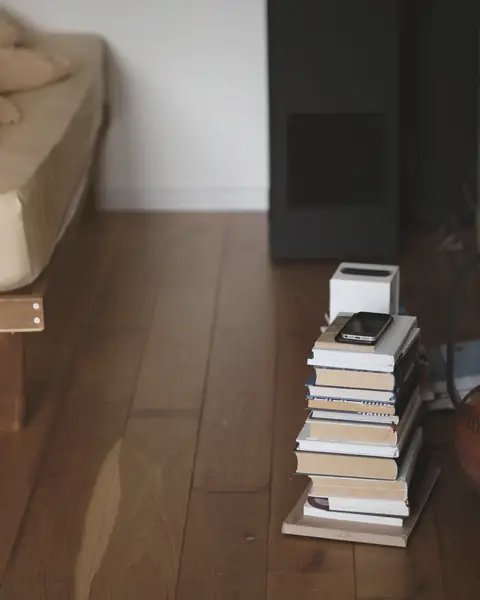
The pile · bought, shelved, unopened
Everything on that shelf was wanted at the moment of purchase. The wanting is real and it is not the part that fails. What fails is the fifteen minutes between sitting down and the book being open in your hands.
where this comes from
From a Goodreads slump thread: “There are so many books that you want to read, but it's difficult to actually open one and read. Or when you try to read, it's hard to focus and you get bored easily.”
sourceDaily Stoic sells a six-week reading challenge at $99, delivered as fifteen email tasks with a private community. Paid structure around reading is an established purchase — it is the daily obligation that is usually missing from it.
sourcePrices and quotes are verbatim from the linked pages, checked in September 2026.
why the pile stays
What the hundred days usually look like
how it runs
Your reading task names the title and the size. The tired evening version of you gets an instruction, not a choice.

Two lines. Ten pages of the wrong book and a decision to drop it is a perfectly good entry — it moves the pile too.

People who also bought more than they read, reporting daily. Consistency becomes visible, and so does its absence.
the shape of it
The stack gets ordered rather than admired. Most people start with the one they have been avoiding least.
The stack gets ordered rather than admired. Most people start with the one they have been avoiding least.
The first book comes off the pile, and the second starts without ceremony. Some titles get abandoned on purpose, which also counts.
The pile is smaller by however much a hundred ordinary evenings move it, and buying has stopped being a substitute for reading.
Three tasks each morning. One report each night. A hundred days of reading.
gallery
before you sign up
No. Nothing ships, nothing is recommended. You read what you already own or whatever you choose.
No. There is no target for the pile and no target for books read. The hundred days count days.
Yes, and writing down that you did is a real entry. Dropping a book on purpose is different from drifting away from reading.
Then that is the reading task. The programme has no opinion on what you read, only on whether you report.
No app to learn. Tasks in the morning, a report at night, in the group's space.
Leave an email and we will tell you when the next group starts. Nothing is charged here.
One email when a start date is set.
ask first